104 Automobile Tire Print, 1953. Monoprint on twenty sheets of paper, mounted on fabric; overall 1 ft. 4½ in. × 23 ft. 10 in. (41.9 cm × 7.3 m), image 1 ft. 4½ in. × 21 ft. 11⅞ in. (41.9 cm × 6.7 m). San Francisco Museum of Modern Art
He had not planned on the rain. It was a Sunday morning in fall 1953, and Robert Rauschenberg was carefully arranging paper—some twenty sheets of it, joined together with library paste into a long strip—on the street outside his studio in Lower Manhattan.1 Out on the quiet street (there was never any traffic on Fulton on Sundays), the rain must have made a sharp ricochet sound as it fell on the paper. After a while, the sound may have softened as the fibers dampened and the paper began settling into the street.
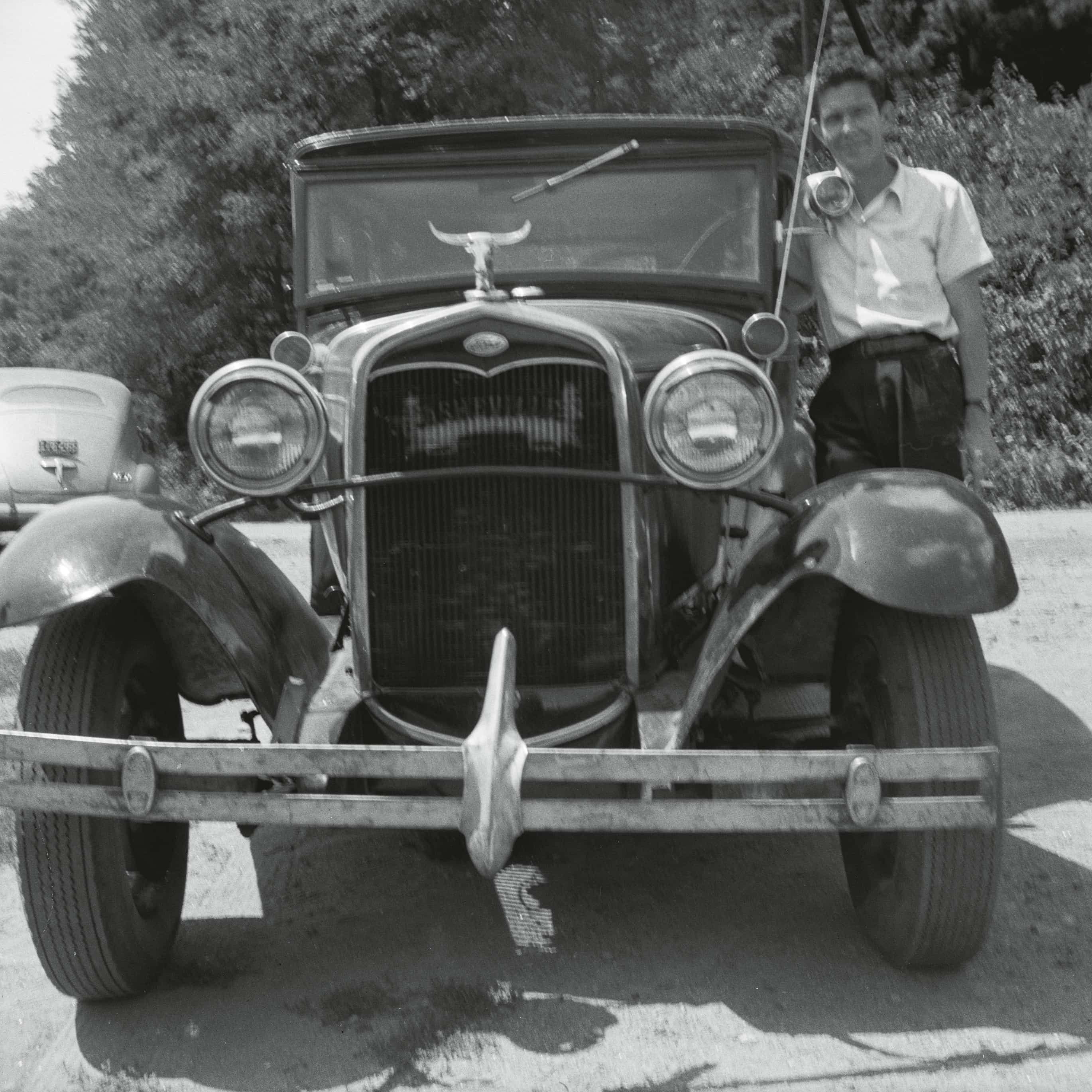
Fig. 1. John Cage standing beside his Ford Model A at Black Mountain College, N.C., summer 1952. Photograph by Robert Rauschenberg
The composer John Cage drove over to Rauschenberg’s studio in his Ford Model A (fig. 1). Rauschenberg coated the front and back tires on one side of the car with black paint, then directed Cage to drive along the paper, trying to keep the tire tracks centered on the narrow strip.2 After the task was completed, Rauschenberg and Cage rushed inside to repair the paper’s precariously pasted seams, which had loosened in the rain. At some point before 1970, the year the print was first exhibited, it was formatted like an ancient scroll: mounted on fabric and rolled onto handles.
Upon examining the unfurled scroll (104), it is evident that Cage did an excellent job with the precision driving task Rauschenberg had set for him. The front and rear tire marks are in near-perfect alignment as they pass in sequence over the paper—so much so that the overlapping double paint tread has sometimes been misidentified as a single one. There are other incidents: unruly spatters of paint here and there; creases propagating across the page like white cracks; an unpainted spot on the edge of one tire that repeats itself three times, marking the number of rotations the tires made as they passed over the strip. And mysteriously, running along the length of the paper, there is an additional tire track: a simple, debossed tread mark (printers might call this a “blind stamp”). This additional, unpainted track is a curiosity, especially as neither Rauschenberg nor Cage ever mentioned it.3
A possible explanation for the unpainted tread mark is that Cage took a dry run along the paper before Rauschenberg painted the tires. It would have made sense to test the premise of the operation before committing to the paint, as it is not self-evident that it is possible to keep an antique automobile driving in a straight line, at a very slow speed, along such a long, narrow strip of paper. And Cage would likely have been unable to see the tire meeting the strip from the driver’s seat. In this sense, he faced a challenge inherent in all printmaking. The act of impression is always invisible to the printmaker; printing is, by definition, a matter of contact under pressure between two surfaces, and there is no room for a supervisory eye in such a tight space. We might think of the debossing as a reminder of the way in which printmaking fundamentally frustrates any project of artistic control.4
In the early 1950s, Rauschenberg was searching for precisely this sort of refutation of artistic control, seeking alternatives to the gestural bravado and self-revelatory ethos of Abstract Expressionism.5 As he put it to Dorothy Gees Seckler in 1965, “There was something about the self-assertion of Abstract Expressionism that personally always put me off, because at that time my focus was as much in the opposite direction as it could be. I was busy trying to find ways where the imagery and the material—and the meaning—of the painting would not be an illustration of my will but more like an unbiased documentation of my observations.”6 Along with the White Paintings, the Black Paintings, and Erased de Kooning Drawing, Automobile Tire Print is a pivotal early attempt by Rauschenberg to imagine a form of painting that would be sensitive rather than assertive, receptive rather than rhetorical.
It might seem counterintuitive that a blackened tire print, with its common connotations of speed, noise, and even violence, could belong to the same family as these more obviously “silent” works, which are predicated on the withholding, erasure, or baffling of gestural marks. Automobile Tire Print differs from them in that it includes a highly conspicuous gesture: the black mark pushing across the white sheets. How could such a mark be a document of observation? I suggest that with Automobile Tire Print, Rauschenberg began a serious exploration of printmaking, broadly conceived, as a way toward a new kind of receptive gesture. Such a gesture might receive and store the world in a state of suspended animation while simultaneously draining the artist’s own subjectivity out of the mark-making process. Automobile Tire Print also harbors a connection with the forms of receptivity that are proper to sound recording: It suggests that Rauschenberg’s early collaboration with Cage helped him imagine printmaking as a mode of listening.
It would be almost a decade before Rauschenberg began working intensively in printshops with printing presses. Yet Automobile Tire Print is very much a print. Although it is bound to no specific printmaking technique, one could think of it as something like a primordial print-object, pointing to myriad print traditions. Technically, Automobile Tire Print is a relief print, one of the oldest forms of printing. Like a woodcut, it was executed by transferring a pigmented medium (in this case, black paint) from the raised parts of a carved or molded surface to a piece of paper. As a cylinder, the tire itself evokes several different printmaking accessories. In its function of applying high pressure, the wheel resembles the ubiquitous rollers of engraving presses. (This is why Rauschenberg said that Cage, rolling the car across the paper, was both the printer and the press.)7 And as a rubber cylinder, the tire recalls the rubber blanket rollers used in offset printing as well as the brayers and rollers used in printshops to spread ink across surfaces.
By engaging with printing, Rauschenberg borrowed from a practice that had already been, for centuries, an art of authorial negation and deferral. The practice appealed to him not (or not only) because it was associated with reproduction but because every mark made in printing displaces, delays, and dilutes the artist’s presence, delegating and distributing it through a series of machines, materials, procedures, and collaborators. Most forms of printing also reverse the artist’s work—especially relief printing, in which acts of marking are not only reversed left to right but also flipped from positive gesture to negative space—inverting it so thoroughly as to become acts of unmarking.8
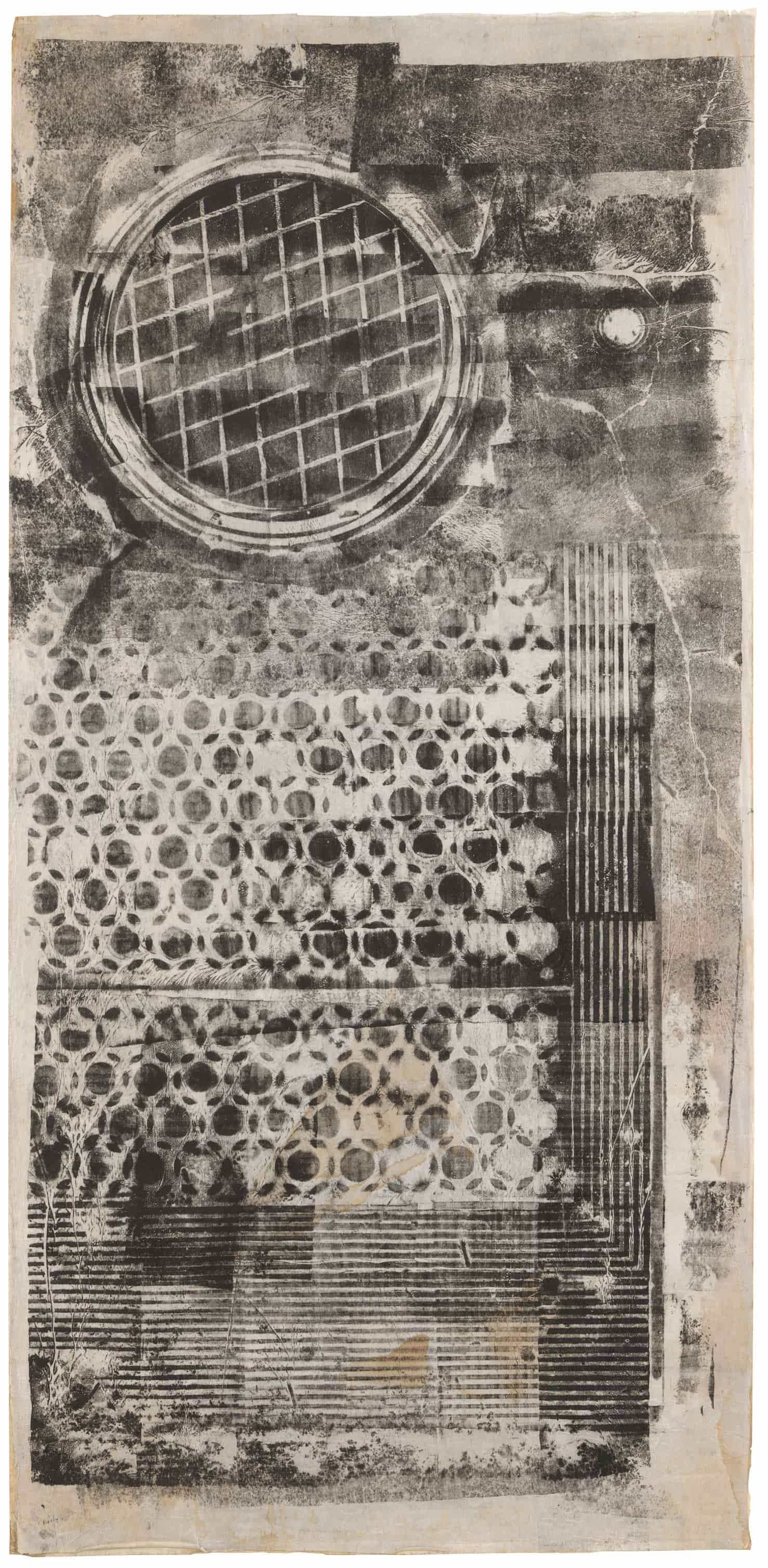
Fig. 2. Sari Dienes, Soho Sidewalk, ca. 1953–55. Ink rubbing on Webril; 80 x 38½ in. (203.2 × 97.8 cm). The Museum of Modern Art, New York
A key precedent for Automobile Tire Print is the sequential woodcut Rauschenberg made at Black Mountain College sometime in 1951 or 1952, This Is the First Half of a Print Designed to Exist in Passing Time (37). In making this print, he performed the paradox of all relief printing: The physical gestures he made on the block became the unmarked (white) parts of the print. Pulling a series of prints from the same block as he gradually gouged away its surface, he created a sequence in which each print carried less ink than the previous one. Expression collapsed into silence. As in almost all forms of relief printing, here the artist’s effort on the block or matrix, the inscriptive labor, literally came to nothing; it became negative space, emptiness, the spaces between the ink. Automobile Tire Print shares broadly, if obliquely, in this logic. The sunken tread lines of the tire, which provided a particular pattern to the tread and helped secure its grip on the street, became interstitial white space in the final work. Thanks to such inversions, Automobile Tire Print’s logic of relief is intimately related to Erased de Kooning Drawing (105), which is also about the paradoxical conflation of gesture and erasure, identity and absence.9 And, of course, it performs in its own way Cage’s insistence on understanding interstitial silence as a part of all music.
Rauschenberg also tapped into the capacities of printing as an art of detection of the otherwise unseen. While Automobile Tire Print is obviously a print of the tires of Cage’s Model A, it is also a physical impression of Fulton Street. The texture of the street, its every topographical incident, was forced up into the paper by the pressure of the tires. In this sense, Automobile Tire Print is akin to another primordial form of printing: rubbing or frottage. In rubbings, the application of pressure and a pigmented (usually dry) medium to a sheet of paper brings up the texture of the surface below it as a kind of apparition. Rauschenberg would have been intimately familiar with this process, having accompanied—and sometimes assisted—his friend Sari Dienes while she made rubbings of New York streets with a brayer around this time (fig. 2).10 The rain on the day of creating Automobile Tire Print meant that the street was more fully registered, the dampened paper pliable and more responsive to the street’s topography. (Dampened paper is often used in printmaking because it allows for more precise deformation into the grooves and depressions of the matrix.) There is also the fact that, as printmakers know, the printing process often detects tiny scratches, smudges, and fingerprints on the plate or block that are invisible to the eye. Inking and printing a plate can reveal subtle incidents that would otherwise remain imperceptible. Automobile Tire Print similarly carries a latent image of the invisible subtleties of the street.
The sensitive energies of printing suggested to Rauschenberg a way of working that could be receptive without being passive. Marks, movements, and gestures did not need to be expressive; they could perform instead a choreography of observation and registration. The receptive gesture explored in Automobile Tire Print evolved later in the decade into the artist’s transfer drawings and, in the early 1960s, into his silkscreen paintings. The scanning motion of the pencil in the transfer drawings (fig. 3), the pull of the squeegee in the silkscreen paintings—these gestures do not so much depict the world as reveal it. Through contact and movement, these processes bring up images that would otherwise have remained latent or obscured. In this sense, we might think of Rauschenberg’s searching gestures as something like echolocations: sound emissions that are also forms of listening. Automobile Tire Print is a record of listening to the street.
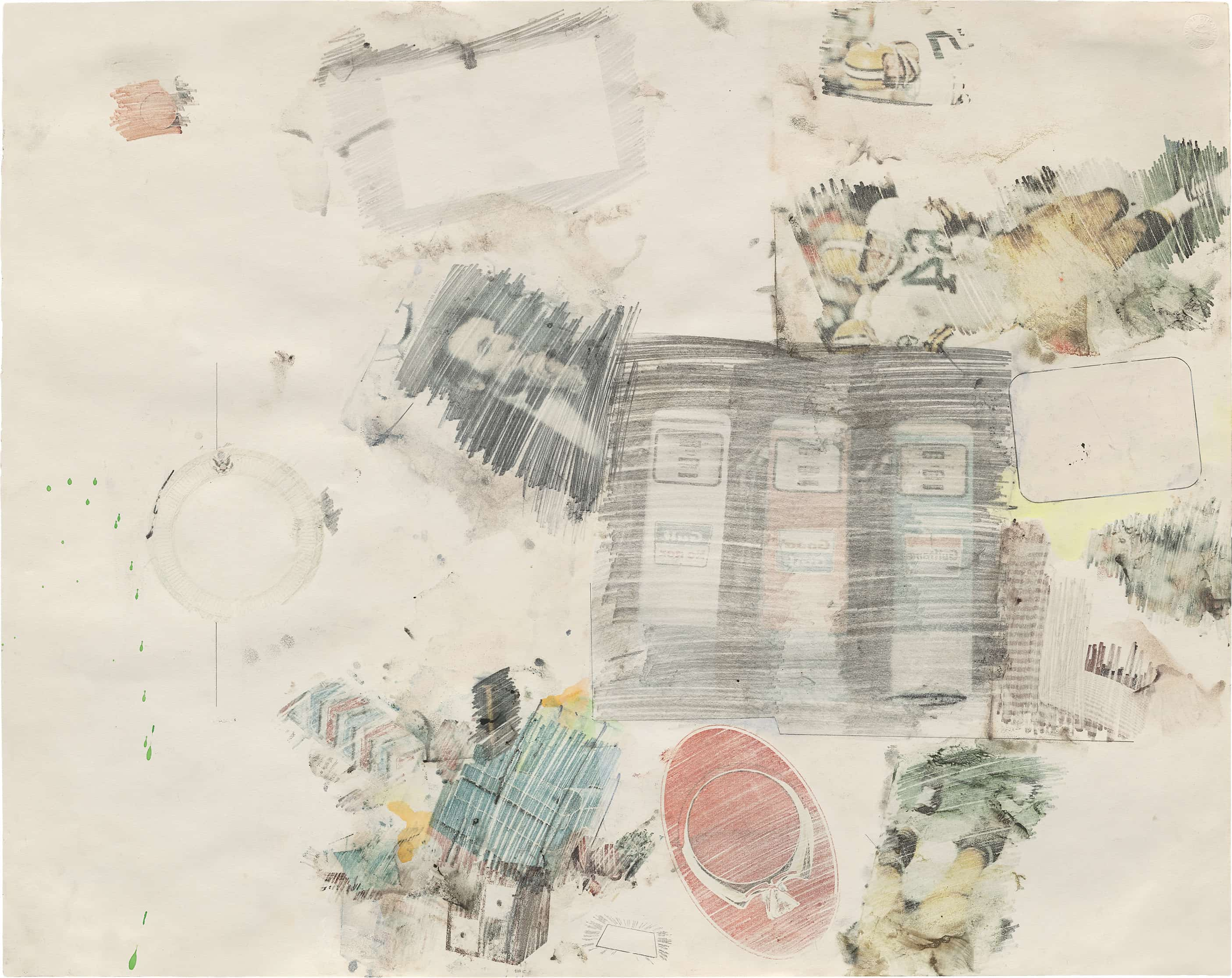
Fig. 3. Robert Rauschenberg, Apprehension, 1963. Solvent transfer, watercolor, pencil, and ink on paper; 22⅞ × 28⅞ in. (58.1 × 73.3 cm). Robert Rauschenberg Foundation, New York
To speak of a “record of listening” is to channel this discussion into the realm of sound, which is appropriate given that it was John Cage behind the wheel for the making of the print. He and Rauschenberg had become closely acquainted the previous summer at Black Mountain, where the artist’s White Paintings had inspired the composer’s own famous symphony of listening, 4'33". Automobile Tire Print can be understood as another example, sparked by their friendship, of an exploratory crossover between the visual and auditory spheres. In this case, it was the act of printing that created a link between image and sound. The work evokes sound printing, which is to say sound recording, both in its appearance and in its approach to the perception and storage of experience. The first sound recordings, made in the mid-nineteenth century—long strips of soot-covered paper wrapped around a cylindrical drum, on which vibrations, in the form of waveform lines, were inscribed by a recording stylus (fig. 4)—look remarkably similar to tire tracks.11 These early soot-paper prints were called “phonautograms” and were understood as fixed archives: They captured the ephemeral movements of sound and made them visible, but it had not yet occurred to anyone that they might be played back. In 1877, Thomas Edison realized that if the sound wave were engraved into a surface, it could later be reanimated by something following the groove, and thus sound recording as we now understand it was born. Some of Edison’s earliest recording media were wax cylinders, which allowed sound to be stored in grooves incised into the wax and then released again by a stylus retracing the grooves.12
This connection between Automobile Tire Print and early sound-recording cylinders might be dismissed as merely pseudomorphic, a false impression derived from superficial similarities, were it not for Theater Piece No. 1, Cage’s 1952 performance at Black Mountain, now often regarded as the first Happening. At the legendary event, in which a small group of participants executed a series of unrelated, self-guided tasks, Rauschenberg played wax cylinders on an antique phonograph; as he later recalled, “I was playing the wax Victrola with the big horn and scratching.”13 It seems unlikely that Rauschenberg would not have perceived the connection between these antiquated, treaded, often dark-colored wax spools and the similarly antiquated, treaded, black rubber tires of Cage’s Model A. In Theater Piece No. 1, Rauschenberg had set cylinders in motion to release sound. Now, a year later, for Automobile Tire Print, Cage set cylinders in motion to release an image.
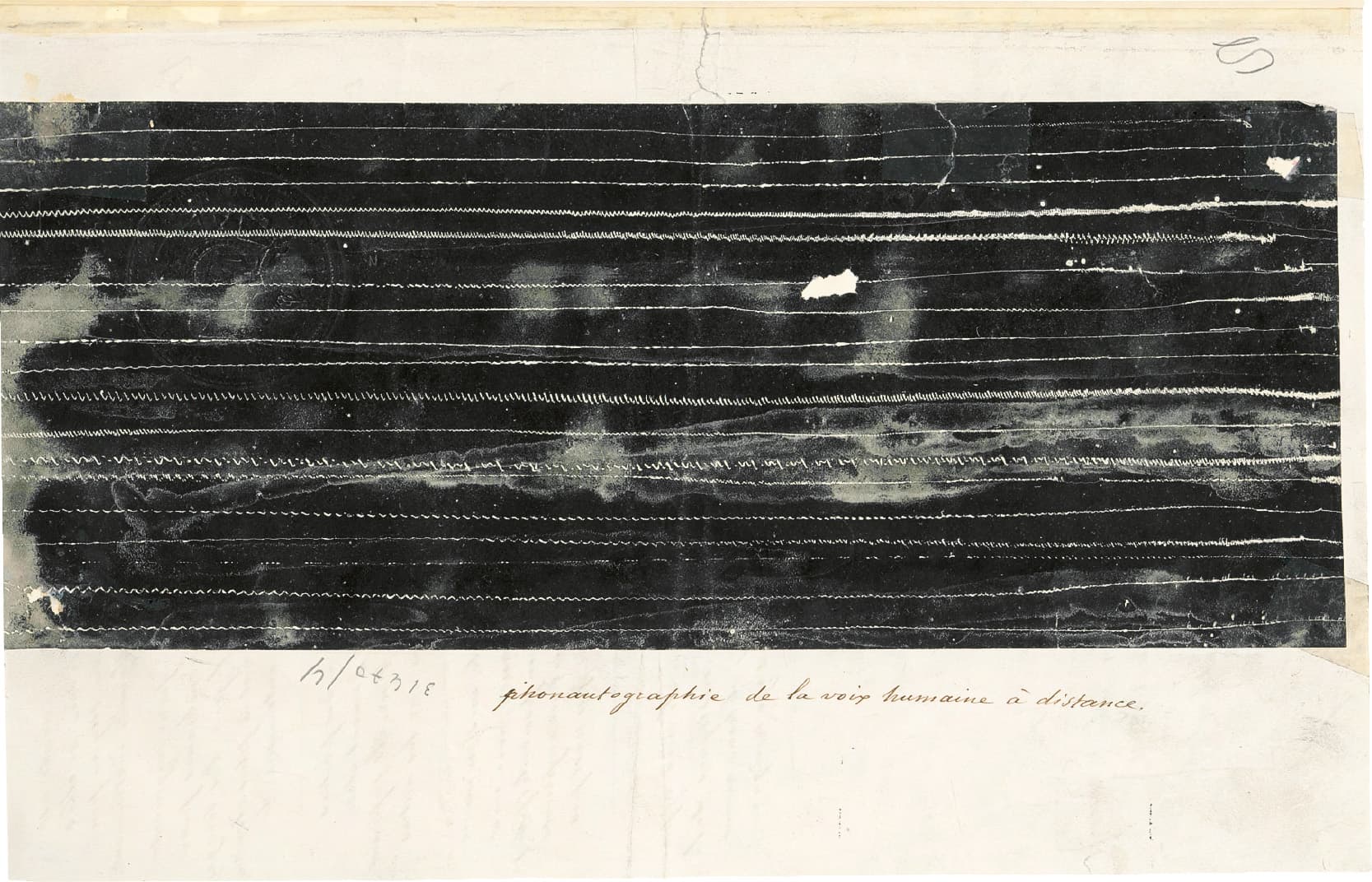
Fig. 4. Phonautogram by Édouard-Léon Scott de Martinville of the human voice “at a distance,” from a patent application, 1857
The receptive gesture Rauschenberg explored in printmaking has a strong analogue in early forms of phonographic sound recording. A stylus receives vibrations (sounds) from the environment and moves (gestures) in concert with those vibrations to inscribe them onto a surface. The movement of the stylus is like the “unbiased documentation” of his “observations” Rauschenberg sought as a model during these years. This connection to sound recording had the additional virtue of suggesting that the printed, documentary trace of Automobile Tire Print could be reanimated. Rauschenberg spoke often of his aversion to the ossification of experience in art objects. He wanted to make art that was not just a “leftover of some activity” and to prevent his work from, in the art historian Branden W. Joseph’s phrasing, “congealing into set forms.”14 This was always a danger in printmaking, as a print is, by definition, a fixed trace of an action. By fortifying the tire print with connections to sound recording, Rauschenberg may have sought to prevent that “leftover” fate. The sound stored materially in a phonograph record can be played back—resurrected—when a stylus retraces the groove. Sound recording holds and releases the flux of experience, alternating between a material trace and a dynamic acoustic event.15
Of course, no amount of rolling and unrolling Automobile Tire Print will bring back the patter of the rain or the chatter of the Model A engine on that fall morning in 1953. The print isn’t a true sound recording. But in its links to sound through Cage, its reliance on cylindrical activation, and its hints at a waveform inscription, it takes what might have been a documentary printing project and turns it into a complex meditation on sensitivity, ephemerality, and enlivenment. Lest there be any doubt that Rauschenberg understood the (silent) Automobile Tire Print in terms of a dynamism proper to sound, it is important to note that on more than one occasion he likened the work to a Tibetan prayer wheel: a cylinder mounted on a spindle, carved around the outside with mantra inscriptions and enclosing a printed scroll, also bearing mantras. To release the mantras into the world, to “play” them, one need only spin the cylinder.16
Automobile Tire Print found Rauschenberg appealing to print as a polyvalent, even polyvocal, technology, embracing its powers in both graphic and audio formats. Early in his career, he found in this cross-format printmaking a gestural language that could oscillate perpetually between observation and emanation, fixation and animation. Activating that dynamic, which he would continue to develop for the rest of his career, required only a turn of the wheel.
There are twenty sheets of paper in the extant scroll, but it is unclear whether all the paper that was originally on the street was included in the final work. In his recollections about making the print, Rauschenberg was imprecise about the total number of sheets used. In an interview with Dorothy [Gees] Seckler in 1965, for example, he said, “I glued, it must have been fifty sheets of paper together; it was the largest paper I had.” Rauschenberg, oral history interview by Seckler, Dec. 21, 1965, AAA.
⤴The paint was the same black house paint Rauschenberg used for the 1953 Black Paintings, sourced from the paint store across the street from his studio. Rauschenberg, video interview by David A. Ross, Walter Hopps, Gary Garrels, and Peter Samis, May 6, 1999, San Francisco Museum of Modern Art, transcript, p. 26, SFMOMA Archives. There is some confusion about how the paint was applied to the tires. Decades later, Rauschenberg reported that he had poured paint on the street and Cage had driven through it before driving over the paper. Rauschenberg, interview by Walter Hopps, Jan. 18–20, 1991, typed notes by Susan Davidson, annotations by Rauschenberg, p. 4, Robert Rauschenberg Papers, RRF Archives. But Cage wrote in 1961 that Rauschenberg had “put the paint on the tires.” John Cage, “On Robert Rauschenberg, Artist, and His Work,” in Metro (Milan), no. 2 (May 1961), reprinted in Silence: Lectures and Writings by John Cage (Middletown, Conn.: Wesleyan University Press, 1961), p. 98. The consistent density and coverage of the paint along the horizontal band strongly suggests that the tires were indeed covered with an even coat of paint before Cage started driving.
⤴The prevailing account of the process in the current literature follows Rauschenberg’s suggestion that the paint was poured onto the street. But in order to account for the blank tread mark, it has been suggested that Rauschenberg poured paint only in front of Cage’s rear tire, so that the front tire made the blank mark and the rear tire made the black mark. See, for example, the medium description in Leah Dickerman and Achim Borchardt-Hume, Robert Rauschenberg, exh. cat. (New York: Museum of Modern Art; London: Tate Publishing, 2016), p. 100, fig. 58: “Tire-tread mark (front wheel) and tire-tread mark with house paint (rear wheel) made by Cage’s Model A Ford.” A close look at the work reveals that there are, in fact, two overlapping painted tracks. A series of looping white lines along one edge of the horizontal black band, resembling a sinusoidal waveform (the top half of which has been lopped off), were made by the tread of one tire as it rolled over the paper before being overwritten by the edge of the other tire, which followed, just slightly offset, behind it. The overlap is also evident at each end of the scroll, where the tracks made by the two tires diverge slightly.
⤴On the blindness of the moment of impression in printing as well as John Cage’s engagement with this factor in prints of his own making, see Jennifer L. Roberts, Contact: Art and the Pull of Print (Princeton, N.J.: Princeton University Press, 2024), pp. 16–19.
⤴For an excellent account of Rauschenberg’s response in this work to Abstract Expressionist painting, see Sarah Roberts, “Automobile Tire Print,” Rauschenberg Research Project, San Francisco Museum of Modern Art, July 2013, https://www.sfmoma.org/essay/automobile-tire-print/.
⤴Rauschenberg, interview by Seckler, Dec. 21, 1965.
⤴Rauschenberg, interview by Ross, Hopps, Garrels, and Samis, May 6, 1999, p. 26.
⤴On printmaking as the alienation and inversion of the artistic gesture, see Roberts, Contact, pp. 167–93.
⤴Hal Foster notes that Automobile Tire Print forms an inverted pair with Erased de Kooning Drawing, calling “the first a gesture of marking, the second of unmarking.” Yet both these works, along with This Is the First Half of a Print Designed to Exist in Passing Time, are better described as balancing the two sides of a marking/unmarking duality. Hal Foster, “‘Made out of the Real World’: Lessons from the Fulton Street Studio,” in Rauschenberg, by Dickerman and Borchardt-Hume, p. 93.
⤴On rubbings as revelatory and forensic gestures as well as the work of Sari Dienes, see Allegra Pesenti, Apparitions: Frottages and Rubbings from 1860 to Now, exh. cat. (Los Angeles: Hammer Museum; Houston: Menil Collection, 2015), pp. 11–25.
⤴For the early history of sound recording on sooted strips of paper, see Patrick Feaster, “Enigmatic Proofs: The Archiving of Édouard-Léon Scott de Martinville’s Phonautograms,” Technology and Culture 60, no. 2, supp. (April 2019), pp. S14–3
⤴Although the term “stylus” is used in both cases, a recording, or “cutting,” stylus and a playback stylus, sometimes called a “reproducer needle” in the early years, were not identical.
⤴Rauschenberg, interview by Hopps, Jan. 18–20, 1991, p. 5. For more on Theater Piece No. 1, see Ruth Erickson, “Chance Encounters: Theater Piece No. 1 and Its Prehistory,” in Leap Before You Look: Black Mountain College, 1933–1957, by Helen Molesworth with Ruth Erickson, exh. cat. (Boston: Institute of Contemporary Art; New Haven, Conn.: Yale University Press, 2015), p. 299.
⤴Richard Kostelanetz, “A Conversation with Robert Rauschenberg,” Partisan Review 35, no. 1 (Winter 1968), p. 94; Branden W. Joseph, Random Order: Robert Rauschenberg and the Neo-Avant-Garde (Cambridge, Mass.: MIT Press, 2003), p. 269.
⤴For more on the connection between sound recording and printmaking, see Jennifer L. Roberts, “Listening to Print,” in Visual Record: The Materiality of Sound in Print, ed. Elleree Erdos (New York: Print Center, 2023), pp. 33–43.
⤴Rauschenberg mentions “Indian Prayer Wheels” in the 1991 interview by Hopps (p. 4). In the 1999 interview by Ross, Hopps, Garrels, and Samis (p. 25), he says that the print is like a “Tibetan prayer wheel.” On prayer wheels, see Trine Brox, “What Is the Value of a Tibetan Prayer Wheel?,” Social Compass 69, no. 2 (2022), pp. 205–22.
⤴
Jennifer L. Roberts, “Listening to the Street: Automobile Tire Print,” Robert Rauschenberg: Paintings and Sculptures, 1948–1953, Robert Rauschenberg Foundation, 2026, https://catalogue.rauschenbergfoundation.org/essays/automobile-tire-print.