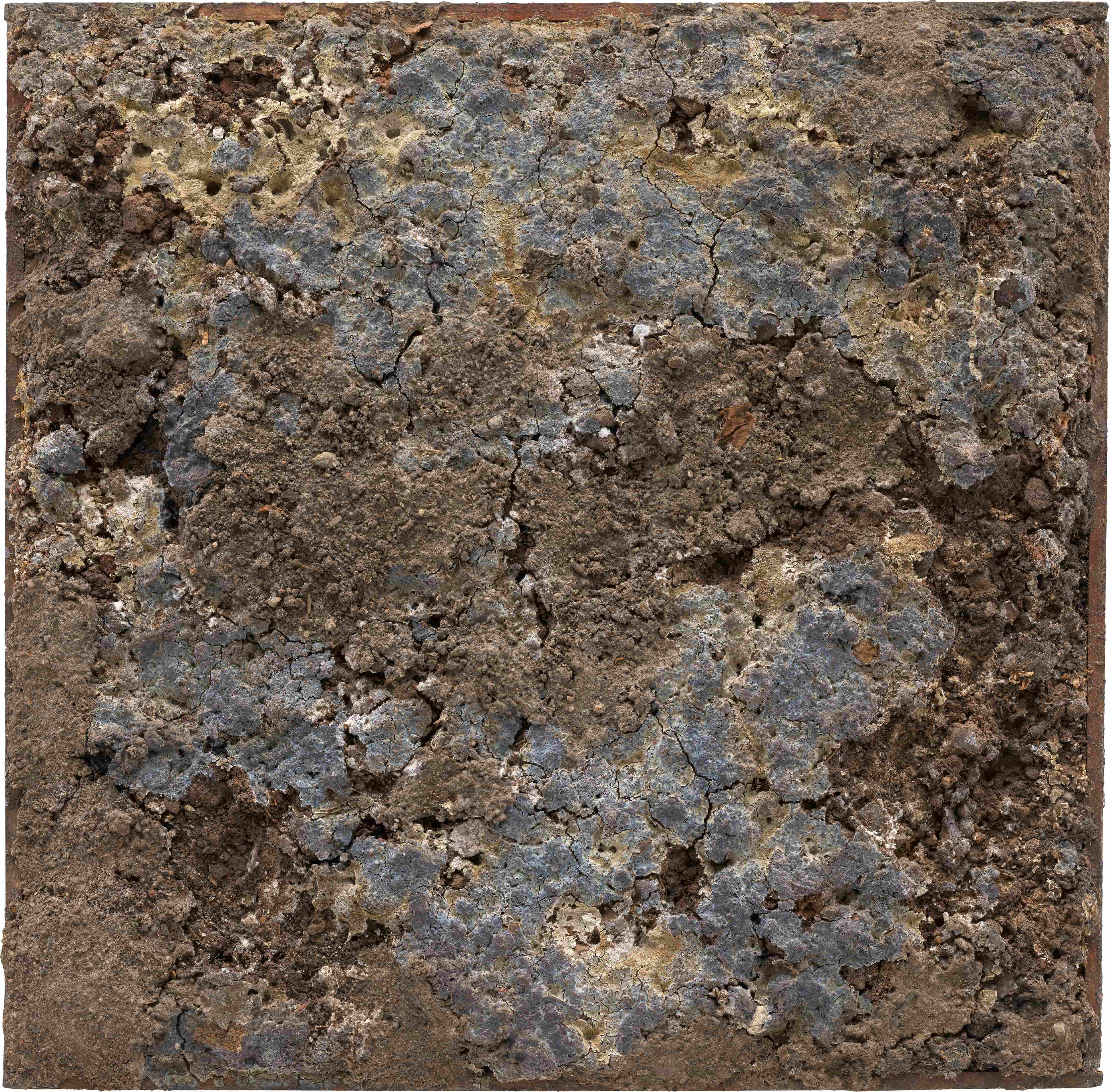
109 Dirt Painting (for John Cage), ca. 1953. Dirt, mold, and nails on wood, in wood frame; 15⅝ × 15¾ in. (39.6 × 40.1 cm). Robert Rauschenberg Foundation, New York
The work in question is unprepossessing: It cannot be described in terms of beauty or awe. A roughly made, shallow box, several inches deep, is packed with dirt whose slight mounds and valleys suggest a topographic view. Cracks offer fault lines, and in places across the surface, patches of blue-gray and beige—manifestations of mold and perhaps other organic growth—have bloomed and dried. While the work must now be viewed in a horizontal position because of its fragility, Rauschenberg intended it to be presented on the wall like a traditional painting.
When Robert Rauschenberg gave Dirt Painting (for John Cage) (ca. 1953; 109) to his friend the composer, he memorialized the gesture with an inscription on the back of the work that reads, “TO JOHN WITH LOVE BOB” (fig. 1).1 Around 1963, Rauschenberg reclaimed the work and never returned it, despite several requests from Cage either to do so or to make another for him.2 What might we say about this unusual gift, one that prompted repossession? Does the work’s history suggest that Rauschenberg wished to keep it close? These questions lead to others: Why make a painting out of dirt? Indeed, in what ways can we understand this work of art—made without any paint at all—as a painting?
In an interview with the critic Barbara Rose around 1972, Rauschenberg offered a framework for approaching these queries: “All material has history. All material has its own history built into it. … It’s just as unnatural for people to use oil paint as it is to use anything else.”3 How, we might ask, in swapping dirt for paint, is the relationship between matter and history revealed in Dirt Painting? And what is to be understood about its position in relation to a group of works made close in time, each of which employs a single basic material (dirt, clay, paper, gold, or lead white paint), in most cases shown within a frame and hung on a wall? The curator Walter Hopps linked these works as a series-like group, calling them “elemental paintings”—a term he first deployed in the catalogue accompanying the 1991 exhibition he organized of Rauschenberg’s early work.4 To elaborate fully how Rauschenberg’s materialization of history is made manifest in the group as a whole, and especially with respect to Dirt Painting, it is worth approaching the work along three trajectories: its place in his development as an artist, its engagement with a natural material that has its own cycle of growth and death, and its interrogation of the social history of value.
Dirt as Experience
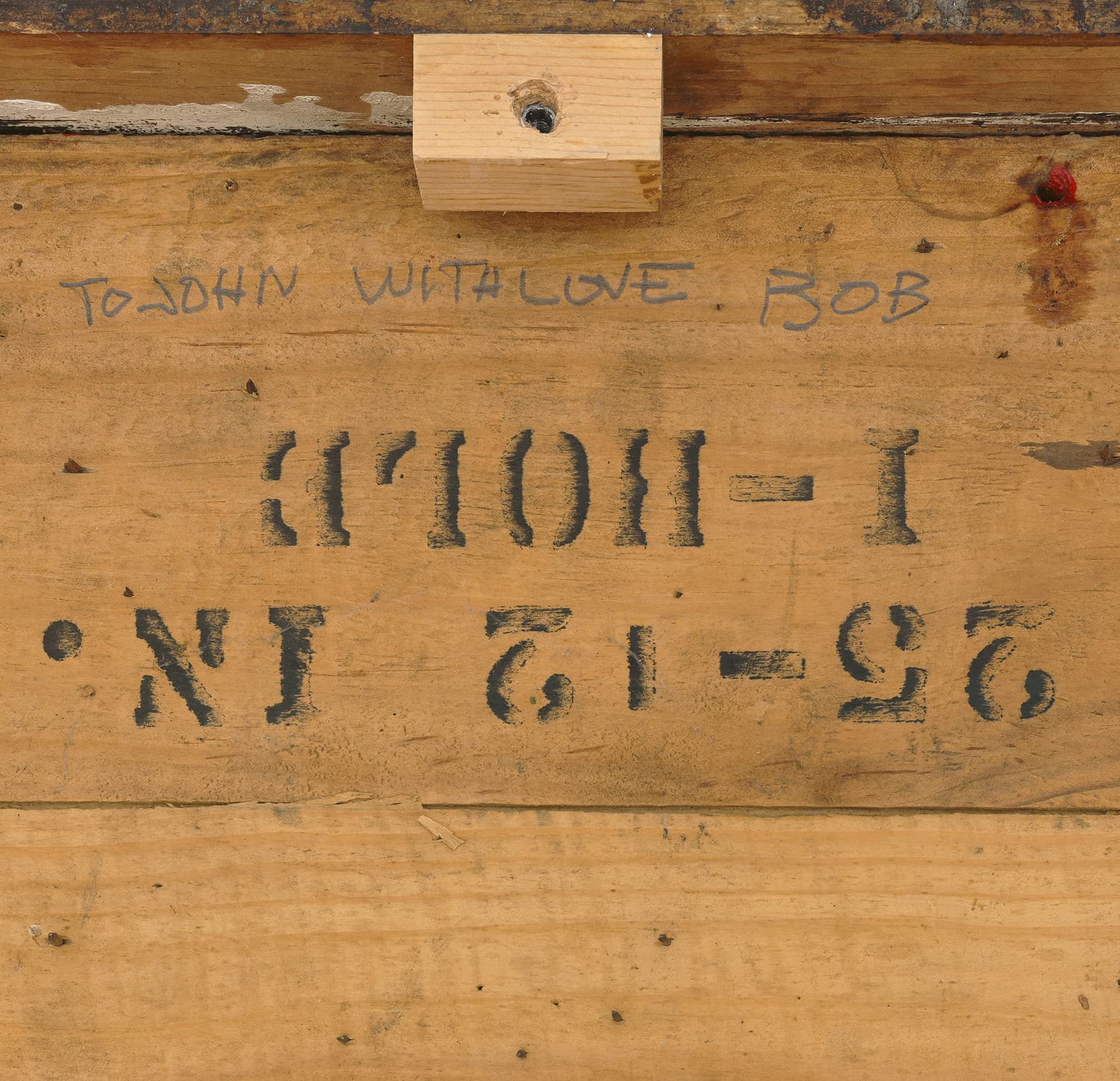
Fig. 1. Robert Rauschenberg, Dirt Painting (for John Cage), ca. 1953 (detail of verso of 109)
Dirt Painting and its “elemental” cousins represent the integration and expansion of lessons Rauschenberg learned at Black Mountain College in North Carolina from the artist Josef Albers, who taught at the school from 1933 and served as its rector from 1947 until his departure in 1949 (fig. 2). Born and raised in Texas, Rauschenberg went to Black Mountain for the first time in October 1948 after a short period in Paris, where he had been enrolled at Académie Julian. There, he had worked with brush and paint, creating works with the loaded, high-impasto strokes of European expressionism. “I went … to study with [Albers],” he later recalled, “because I knew that I didn’t want to end up being the kind of painter I was going to be if I just kept making street paintings in Paris.”5 Albers may have been ambivalent about his Texan student, but Rauschenberg described Albers consistently as his “most important teacher.”6
The crux of Albers’s instruction at Black Mountain was the exploration of material, which he believed was the only viable focus of artistic training—as opposed to, say, skill in draftsmanship or creative expression. “It is not enough,” he wrote, “to memorize historical interpretations and aesthetic views of the past or merely to encourage a purely individualistic expression.” Rather, in studying the problems of form and material, Black Mountain’s program offered a mode of experiencing the world itself, teaching the student to “open his eyes to the phenomena about him and, most important of all, to open to his own living, being, and doing.”7 As part of the curriculum, Albers assigned various series of “studies” centered on testing the properties of materials through a specific action or operation and observing the results (for example, folding a piece of paper to achieve the maximum vertical height or constructing something entirely out of glass straws), as well as others that combined disparate materials and explored their surface properties in relation to one another through the creation of dimensional, tactile collages. In both cases, students were encouraged to look beyond the inventory of traditional art materials—sometimes, far afield. “Combinations” (a term, it would seem, that Rauschenberg held onto with his later “Combines”) produced by Albers’s students incorporated not only paper, corrugated cardboard, and sheet metal but also natural materials such as leaves, seeds, and eggshells; man-made objects such as metal washers and cigarettes; and even Passover matzos. Albers’s exhortation that all manner of things could be ingredients in art making had its echo in Rauschenberg’s words to Barbara Rose: “There’s no such thing as ‘better’ material.”8
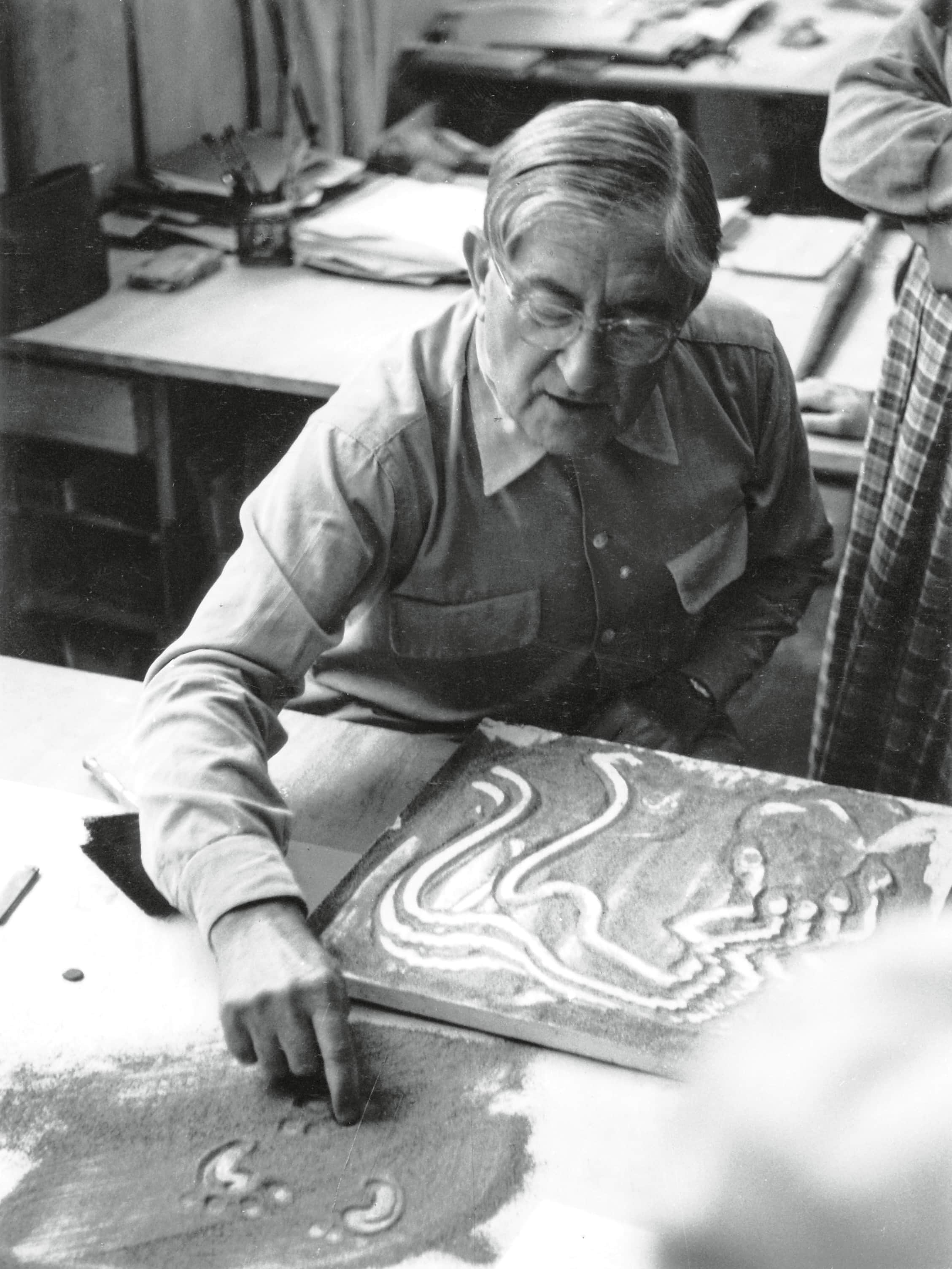
Fig. 2. Josef Albers drawing with sand, probably while teaching in the Department of Design, Yale University, New Haven, Conn., 1950s
Dirt Painting, like Rauschenberg’s other elemental paintings, can be seen as a step in the process of amplifying and transforming Albers’s pedagogical principles into the foundations of his own artistic practice. Such works were not, however, the first instances of Rauschenberg’s engaging with nontraditional materials. Made in summer 1951, during his second sojourn at Black Mountain—when, by his own account, he had “no invitation, just went”—the Night Blooming paintings (28, 29, 30) were perhaps his first works to incorporate dirt.9 For those paintings, Rauschenberg, working together with Cy Twombly, covered canvases with hot, tarry bitumen. Then, egged on by Robert Motherwell, an artist Rauschenberg greatly admired who was also in residence, Rauschenberg and Twombly pressed the sticky surface of the paintings onto the roadbed to pick up gravel and dirt. Their fellow student Fielding Dawson recalled the scene some years later: “Rauschenberg and Twombly [were] on the gravel patio beneath the Studies Building, gazing down at a large canvas, covered in most part by tar. They tossed handfuls of pebbles on it. Motherwell, between them, gestured. Said to throw more, and they did. ‘More.’ They did. ‘More.’ They did. ‘More.’ They did.”10 Dawson’s words suggest that these works may have been an initial step in conceiving of a painting as a surface for accumulation. This is generally understood as a description of the genesis of Rauschenberg’s Night Blooming paintings, which incorporate dirt into their surfaces. Yet, if the Night Blooming pictures offer a precedent for Dirt Painting in their use of nontraditional materials (such as gravel)—though in works otherwise produced by traditional means, with paint and brush (and constituting a series to which the artist gave a poetic, evocative, Motherwell-like title)—they are still quite far from the radical act, the irreducible materiality, of presenting dirt within a frame as painting. As Rauschenberg later recognized, he remained completely engaged with the idea of painting while making the Night Blooming works: “I doubt if you could have found anyone more involved than I was, to the point of being stupid about it.”11
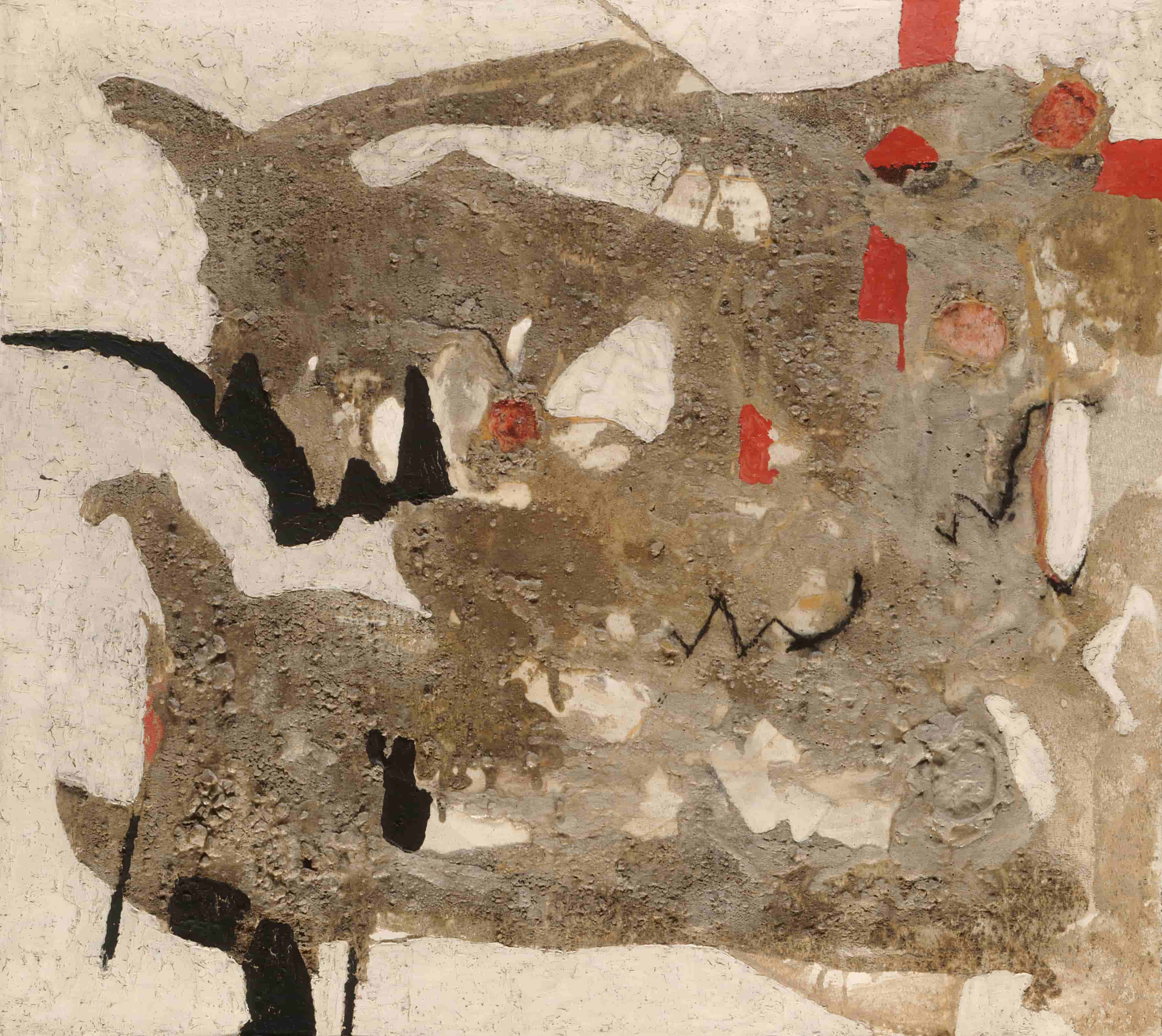
Fig. 3. Alberto Burri, Mold (Muffa), 1946–56. Oil, synthetic polymer, pumice, and metallic paint on canvas; 28⅜ × 31½ in. (72.1 × 80 cm). Art Institute of Chicago
Rauschenberg turned to nontraditional earth materials again during his time in Italy in 1952 and 1953. In Rome, in winter 1953, he visited the artist Alberto Burri’s studio twice.12 According to Burri, he and Rauschenberg “did not open our mouths for the simple reason that at the time I did not speak a word of English and he, naturally, did not know any Italian.” Rauschenberg nonetheless presented the Italian artist with one of his Scatole e Feticci Personali (“personal boxes and fetishes”), a tiny treasure chest containing sand and a dead fly.13 The Scatole series evokes both Joseph Cornell and Victorian souvenir boxes: The works’ miniature architecture suggests the frame of memory, while the meaning of their contents—their materials—is withheld, as if unknown or forgotten.
In Burri’s studio, Rauschenberg almost certainly saw three of the artist’s large Sacchi (“sacks”), rough-hewn, tactile collages made from burlap bags mounted on canvas—including one that incorporated creosote and gold leaf—in which the forms of traditional painting are maintained even as the materials used are decidedly untraditional. He likely also encountered Burri’s Muffa (“mold”) paintings (fig. 3), which, according to the art historian Emily Braun, were widely known in the Rome art world.14 Rauschenberg’s interest in Burri continued upon his return to New York, where, in November or December 1953, he took many photographs of the Italian artist’s exhibition at Stable Gallery. All of this suggests that the model of Burri’s practice held significance for Rauschenberg. The curator Alan Solomon positioned Rauschenberg as an important reader of Burri’s work when, in the catalogue accompanying the 1968 exhibition Young Italians, he wrote that Rauschenberg seemed to have “taken something from the Italian in the early fifties.”15 But for Burri, the younger artist’s engagement with his work was more malign; he later interpreted it as an act of intellectual theft without acknowledgment rather than a gesture of dialogue.16
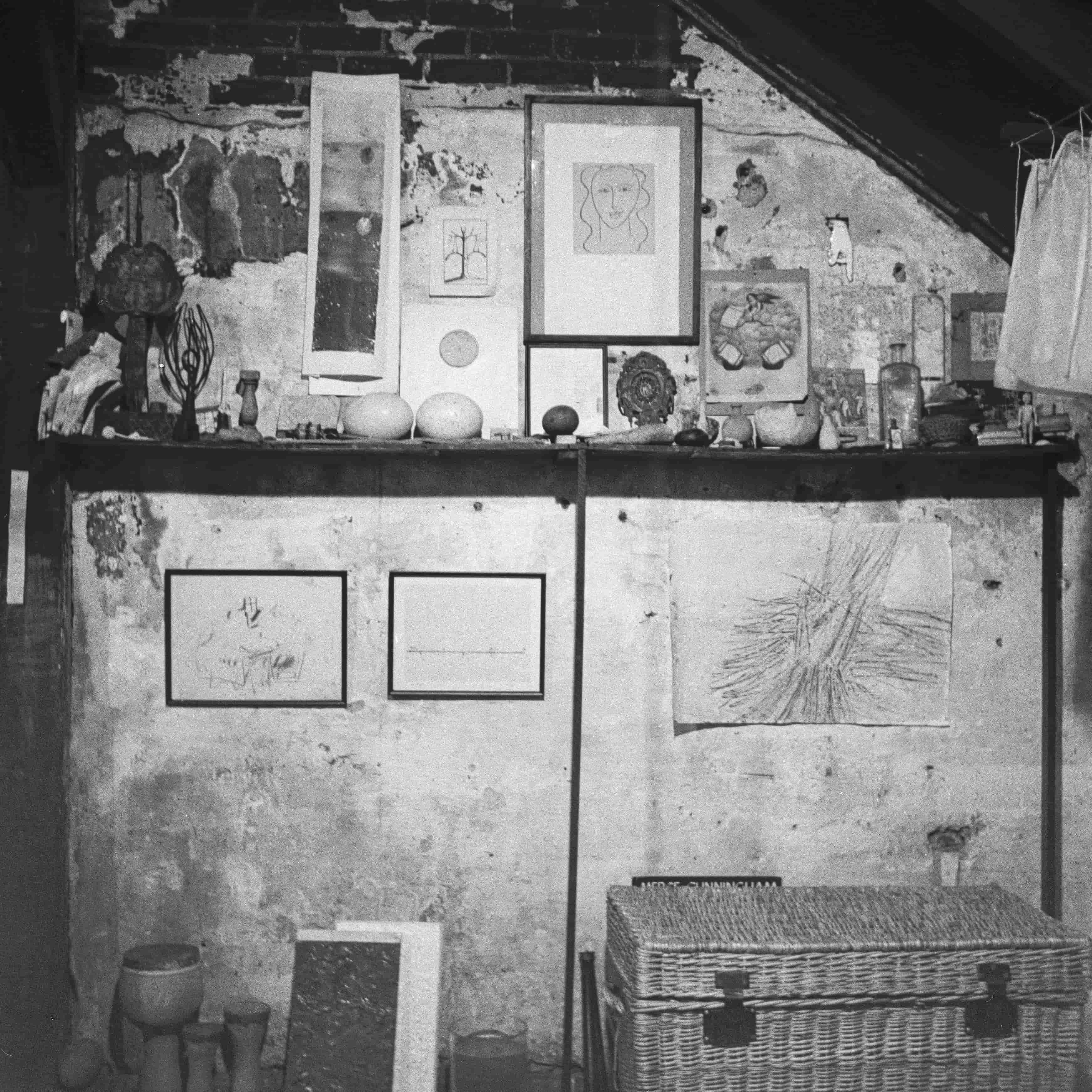
Fig. 4. A wall in Robert Rauschenberg’s studio, 61 Fulton Street, New York, ca. 1953–54. Photograph by Robert Rauschenberg
The sense of marking steps in a personal history—of linking matter to experience—culminated in an enigmatic work by Rauschenberg that is no longer extant. Originally titled – – – – (Four Dashes) when presented at Stable Gallery in 1955 in an exhibition organized by Thomas B. Hess, editor of Artnews, the piece later became known as Self-Made Retrospective. Ultimately dismantled and its components dispersed, it consisted of a shallow cabinet in which Rauschenberg hung reduced-scale paintings in the style of his works of the previous four years (1950–54), apparently including a Black Painting, a White Painting, a Red Painting, a Gold Painting, a painting modeled on those shown at Betty Parsons Gallery in 1951, and a dirt, or “growing,” painting.17 Rauschenberg’s integration of display furniture here is akin to his use of it in his 1955 Combine Short Circuit (see Molesworth, fig. 4) or to Jasper Johns’s use of purpose-built cabinetry in Target with Four Faces (1955).18 Indeed, both Four Dashes and Short Circuit evoke a shelf seen in photographs of Rauschenberg’s studio on Fulton Street in Lower Manhattan, on which he displayed drawings and reproductions of his own work, works made by friends and other artists he admired, and various found objects—treasures that served as markers of friendship and influence and souvenirs of significant moments (fig. 4). The use of furniture with framing elements and dividers, as we might imagine was the case in Four Dashes, seems to propose that the component parts make sense in relation to one another—that, together, they tell a story—in a way they would not on their own. It is a structure for viewing things in a relational way. The works represented in Four Dashes seem to have self-consciously inventoried Rauschenberg’s production to date, from his days at the Art Students League of New York to Black Mountain College to the moment of the work’s making, in a form of self-accounting that suggests a logic underlying the progression. Rauschenberg’s response when asked many years later about the Gold Painting now jointly owned by the Museum of Modern Art, New York, and the Solomon R. Guggenheim Museum, New York (113), may offer insight: “That was one of the by-passes,” he responded, setting the work within a sequence, “from the all-black, all-white, the gold … and the silver, and then the red.”19 What Rauschenberg meant by “by-passes” is not entirely clear, but it suggests that the listing of these works is a form of internal history, a linkage in which one idea leads to another.20
Natural History
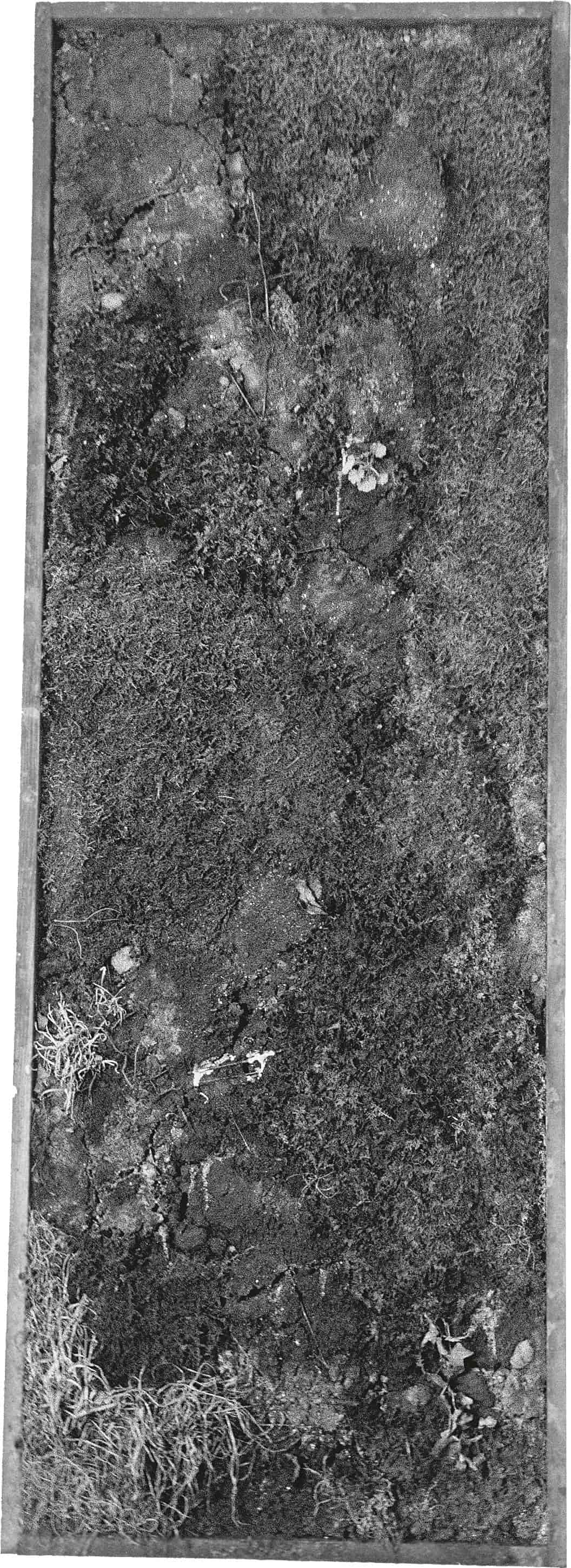
Fig. 5. Robert Rauschenberg, Growing Painting, 1954. Dirt, moss, grass, and ivy on wood, in wood frame (?); dimensions unknown. Destroyed by the artist (RRF 53.030)
When Barbara Rose asked Rauschenberg, “What are the most inventive things you’ve done?,” among his replies was, “I did dirt paintings.” Continuing, he recalled, “I was working on one dirt painting underneath a bird cage. Then grass started growing on it and I had to take care of it.”21 There is no extant image of this first “growing” painting, but soon afterward, Rauschenberg offered another, titled Growing Painting (fig. 5), as his sole contribution to the Third Annual Exhibition of Painting and Sculpture at Stable Gallery in winter 1954. The dirt was packed into a tall—probably about 6-foot-tall—narrow frame, and after the grass sprouted, the work was hung on the gallery wall. As the choreographer Paul Taylor later recounted, “Although [Rauschenberg] had sprayed fixative by the quart, it had been hard to get the frames to hang on the wall without everything falling out.”22 Rauschenberg visited frequently to water the piece, responding to its need for upkeep.23 The painting was “about looking and caring,” the artist explained. “Those pieces would literally die if you didn’t water them.”24
The responsibility of care foregrounds the idea of an artwork as animate, as having a life cycle—of growth, of transience and ephemerality. Death, even killing, is likewise a possibility. In one story Rauschenberg told about Growing Painting, he claimed to have destroyed the work in response to the death of two white mice he had bought as a present for a friend. When the intended recipient refused to see him that day, the mice froze to death overnight in the unheated loft that served as Rauschenberg’s studio and home: “So I broke the growing painting into bits. It was another sort of dying. The painting was having problems with the lack of heat anyway. And no one was particularly interested in it. They couldn’t see that there was much more to it. There was the feeling that you have to take care of things in order to keep them going. That’s true with art. When the mice died, I killed the painting.”25 Killing as a refusal of care, a refusal to meet another’s needs, echoes across the chain of these three incidents—one in relation to another human being, another to animal life, and the third to the grass-growing painting.
In John Cage’s 1961 essay “On Robert Rauschenberg, Artist, and His Work,” the unnamed narrator underlines the dynamic agency of dirt as material: “The message is conveyed by dirt which, mixed with an adhesive, sticks to itself and to the canvas upon which he places it. Crumbling and responding to changes in weather, the dirt unceasingly does my thinking. He regrets we do not see the paint while it’s dripping.”26 The Cageian avatar emphasizes change over time, the temporality inherent in an artwork, and the act of ceding agency or of acknowledging the agency of others, even of inanimate forces (“the dirt unceasingly does my thinking”). Indeed, this idea of an encounter with material or with another human being in which the artist does not exercise singular creative control characterizes Rauschenberg’s practice as a whole. He later commented, “I’ve always felt as though, whatever I’ve used and whatever I’ve done, the method was always closer to a collaboration with materials than to any kind of conscious manipulation and control.”27 Such a commitment to shared agency may reflect the artist’s drive to find a way of working that, in contrast to Abstract Expressionism, was not “just an expression of my personality—I feel it ought to be much better than that.”28
In this sense, the last line of Cage’s paragraph is telling. “He regrets we do not see the paint while it’s dripping,” the composer wrote, in a nod to the power of gravity. There is, in fact, no paint here—and yet, for anyone in those years, the suggestion of paint dripping could not but evoke Jackson Pollock, especially the images made by the photographer Hans Namuth in 1950 of Pollock dripping and throwing paint from the end of a mixing stick onto canvases laid on the floor. We might understand from this “regret” that if Rauschenberg’s Erased de Kooning Drawing (1953; 105) took on the legacy of one painter, Willem de Kooning, Dirt Painting did the same with another. At the Cedar Tavern in Greenwich Village, relates the writer Calvin Tomkins, Rauschenberg used to bait his bar mates by saying that “it would be more insulting to paint like de Kooning or Pollock than to do what he was doing, [that is,] try to find some other way to do things, but he never felt he got through to anyone.”29 Dirt Painting encapsulates this particular sense of entangled homage and rebellion. Pollock put painting on the floor; Rauschenberg put dirt on the wall. Even the look of the work, with its halos of mold, seems to offer an ironic echo of Pollock’s delicate skeins of paint. Most significantly, Dirt Painting acknowledges a conceptual opening in Pollock’s work: the movement between the vertical, anthropomorphic plane of traditional painting and the ground plane of matter.
The art critic and historian Leo Steinberg called attention to the significance of this move—placing on the wall for display as art a work made on, and conceptually inhabiting, the horizontal ground plane of the floor. Despite Steinberg’s reluctance to bestow his critical blessing on Growing Painting—he deemed it among the “most clownish of Rauschenberg’s youthful pranks”—he nevertheless described it as a “transposition from nature to culture through a shift of ninety degrees.”30 He recognized and named the fundamental conceptual reorientation of the zone of art from the wall to the ground, from an ocular regime to one of matter, and from nature to culture. Indeed, here is a clear articulation of the shift Rauschenberg called the “beginning of the combines” and Steinberg famously described as the “flatbed picture plane”—the conceptual revolution, which the critic situated around 1950, when paintings no longer simulated vertical fields but rather opaque, flat horizontals.31
Social History, or a Matter of Value
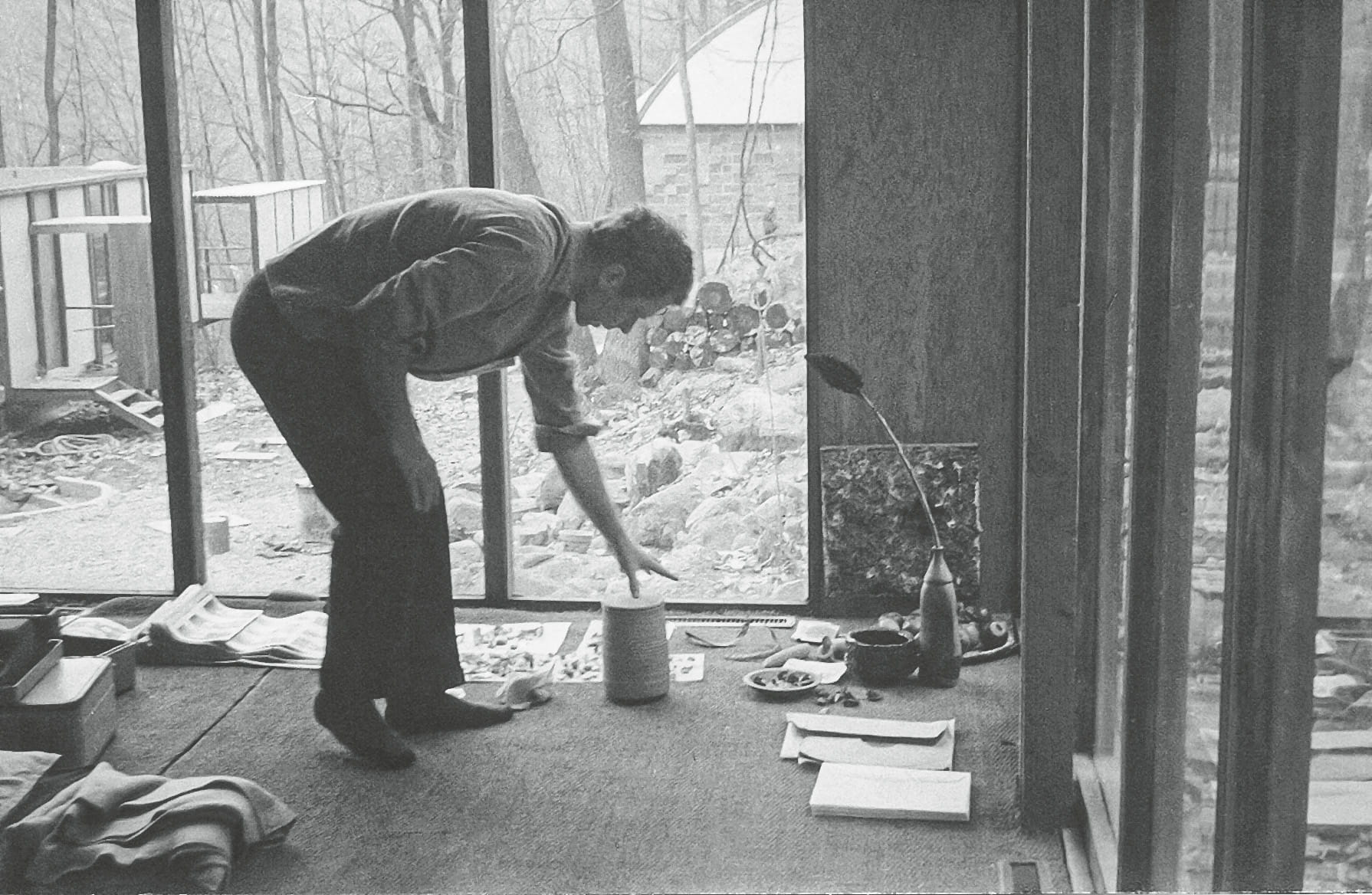
Fig. 6. Merce Cunningham in John Cage’s house with Dirt Painting (for John Cage) (109) in the corner, Stony Point, N.Y., 1956
In the elemental paintings, Rauschenberg isolated primary materials—dirt, clay, gold—as reliefs in frames. These containers might be seen to offer an analogy to the time brackets Cage introduced in his collaborative Theater Piece No. 1 at Black Mountain College in August 1952, a work in which Rauschenberg took part: Each performer was given specific times to start and to stop, with the activity in between left to their determination. In the same way Cage proposed to define what happened within the delimitations of the time brackets as art, Rauschenberg defined as art what appeared within the frame. But if Cage’s brackets allowed for the chance juxtaposition of concurrent events, the frames around Rauschenberg’s “elements” established a comparative structure, a way of testing not only the characteristics of the materials that appeared inside them but also broader ideas of the materials’ social value and worth. In an interview with the journalist Dorothy Gees Seckler in 1965, Rauschenberg explained, “I did a painting in toilet-paper, then duplicated it in gold-leaf.”32 No toilet paper examples are extant, but eleven Gold Paintings have survived.33 In them, Rauschenberg loosely laid down sheets of gold leaf on canvas or wood so that they maintained a crinkled dimensionality and could flutter, or even blow away, in a current of air. Looking at the results side by side was clarifying for Rauschenberg. As he explained to Seckler, “I studied both very carefully and found no advantage in either: whatever one was saying, the other seemed to be just as articulate. I knew then that it was somebody else’s problem—not mine.”34 Beyond judging the relative expressive capacities of each material, Rauschenberg also claimed to be “testing the market. I knew this. Gold stays and toilet paper gets thrown away.”35 As Rauschenberg recalled, “My thing was … how ‘crude’ is this outside world. I guess even to think of the project I must have had the answer.”36 Calvin Tomkins suggested, however, that it was Rauschenberg himself who threw the paper painting away.37
The Gold Paintings seem nonetheless to encompass a degree of market subversion. Gold leaf (and silver leaf, which appears in certain examples) was a costly material to which Rauschenberg had access through the work he was doing at the time for the retail window designer Gene Moore—and which he seems to have appropriated.38 Jasper Johns recently recalled that Rauschenberg made a number of the Gold Paintings in Johns’s studio on Pearl Street before Rauschenberg moved into the loft upstairs in September 1955.39 Johns worked on the framing of some, helping to create an enclosure that would allow air to flow over the surface but prevent any handling. Johns noted, with characteristic succinctness, that the Gold Paintings “sold well,” adding that he himself made “one ‘gold painting’ as a ‘Rauschenberg’ and Leo [Castelli] sold it.”40
If Dirt Painting served as a provocation for the market, it also proposed an alternative frame for considering the history of matter: as a marker of labor. Eleanor Ward hired Rauschenberg as a handyman to clean and install work at Stable Gallery, part of a former stabling space for horses near Central Park South.41 “I was both the janitor and the only non-Italian artist (except for Cy Twombly) that was showing at the Stable Gallery,” Rauschenberg later recalled.42 Paul Taylor tells a story in his autobiography, Private Domain, of stopping by the gallery between rehearsals in 1954:
I went downstairs to see what was in the basement and found a copper-haired guy of about my own age sweeping dirt into a pile. He introduced himself as Bob Rauschenberg, said that he was a painter and that he supered the gallery for its director, Eleanor Ward, in return for being allowed a basement show of his own. The basement was featuring his latest work, something that he called dirt paintings. One of them had just fallen off the wall. … In addition to the dirt paintings, his show included some enigmatic stones and a few small boxes filled with curiosities that he had scavenged from beaches and streets.43
Taylor’s tale is revealing, and it brings the social and material histories crystallized in Dirt Painting full circle. The choreographer encountered Rauschenberg sweeping dirt, an activity that allowed the artist to exhibit his work. That Rauschenberg presented Growing Painting at the same gallery makes manifest the following equation: Rauschenberg swept dirt to make art, and Rauschenberg made art out of dirt. Working on the dirt paintings led to a form of material testing and a new idea of the picture plane as a surface for matter. Dirt Painting (for John Cage) began to occupy a position in Rauschenberg’s retrospective self-reflection at the beginning of his career as a mature artist. Now, roughly seven decades after its making, the organic matter in Dirt Painting’s substrate has produced a patina of lacy mold; the adhesive that once held the dirt inside the vertical frame, however precariously, can no longer be trusted to do so; and the work can be shown only in a horizontal position. To consider the personal, natural, and social-historical dimensions of materials means to integrate an idea of time, of bringing matter and time together: “All material has history. All material has its own history built into it.”44
Although the exact date of Rauschenberg’s gift is unknown, Dirt Painting was in Cage’s possession by 1956, when it appeared in a photograph taken at Gate Hill Cooperative (also known as “The Land”) in Stony Point, New York, the composer’s residence at the time (see fig. 6).
⤴After the close of Rauschenberg’s 1963 retrospective at the Jewish Museum, New York, Dirt Painting was delivered, per Cage’s instructions, to Rauschenberg’s New York studio. Over a decade later, when the work was exhibited in Rauschenberg’s 1976 retrospective organized by the National Collection of Fine Arts, Smithsonian Institution, Washington, D.C., the artist, rather than Cage, was named in the work’s credit line and on the loan list. It was at this point that the parenthetical “(for John Cage)” was appended to the work’s title. In 1984, Cage wrote to Rauschenberg requesting a dirt painting “like the one I had years ago.” John Cage to Rauschenberg, Nov. 5, 1984, Robert Rauschenberg Papers, RRF Archives. The artist began work on a replacement in 1992, but Cage died on August 12 of that year, before its completion. Rauschenberg gave the finished piece, Clay Painting (for John Cage and Merce Cunningham), to Cage’s partner, Merce Cunningham.
⤴Rauschenberg, interview by Barbara Rose, ca. 1972, transcript, p. 5, Robert Rauschenberg Papers, RRF Archives. Portions of the interview are published in Barbara Rose, Rauschenberg (New York: Vintage Books, 1987), p. 58.
⤴Walter Hopps, Robert Rauschenberg: The Early 1950s, exh. cat. (Houston: Menil Collection; Houston Fine Art Press, 1991), pp. 169, 227. The term appears on the final page of Hopps’s text and in the chronology (“elemental paper, dirt, and gold paintings”).
⤴Rauschenberg, quoted in Rose, Rauschenberg, pp. 26, 34.
⤴Rauschenberg, typed statement on Josef Albers, n.d. [ca. 1964], Robert Rauschenberg Papers, RRF Archives.
⤴Josef Albers, “Concerning Art Instruction,” Black Mountain College Bulletin, no.2 (June 2, 1934), p. 3.
⤴Rauschenberg, quoted in Rose, Rauschenberg, p. 58.
⤴Rauschenberg, quoted in Calvin Tomkins, “BIO-7,” n.d., Calvin Tomkins Papers, series IV.C, folder 10, MoMA Archives.
⤴Fielding Dawson, “Summer of ’51,” in The Black Mountain Book, by Fielding Dawson, rev. ed. (Rocky Mount: North Carolina Wesleyan College Press, 1991), p. 113.
⤴Rauschenberg, quoted in Tomkins, “BIO-7,” n.d.
⤴Stefano Zorzi, Parola di Burri (Turin: Umberto Allemandi, 1995), p. 35.
⤴Burri, “Burri on Rauschenberg.”
⤴Emily Braun, “The Burri Effect,” in Alberto Burri: The Trauma of Painting, by Emily Braun, exh. cat. (New York: Solomon R. Guggenheim Foundation, 2015), p. 75.
⤴Alan Solomon, “Italian Art of the Mid-Sixties,” in Young Italians, exh. cat. (Boston: Institute of Contemporary Art, 1968), n.p.
⤴Burri, “Burri on Rauschenberg.”
⤴Rauschenberg gave slightly different accounts of Self-Made Retrospective’s contents to Barbara Rose and Walter Hopps. Rauschenberg, interview by Barbara Rose, March 28, 1987, p. [1], Barbara Rose Papers, 1940–1993, series II, box 1, folder 31, Getty Research Institute, Los Angeles; Rauschenberg, interview by Walter Hopps, Aug. 1, 1991, handwritten notes by Susan Davidson, p. 4A, Robert Rauschenberg Papers, RRF Archives. Untitled (
⤴), in the Sonnabend Potamianos-Homem Collection, and Untitled (RRF 54.012), in Jasper Johns’s collection, may have originated as elements of Self-Made Retrospective. Target with Four Faces, 1955 (The Museum of Modern Art, New York [8.1958]).
⤴Rauschenberg, oral history interview by Joachim Pissarro, April 20, 2006, transcript, p. 8, Oral History Program, MoMA Archives.
⤴This order is not exact; there was likely more overlap and simultaneity than a strict sequence. In certain Gold Paintings, for example, the ground underlying the sheets of gold leaf resembles a Red Painting. See, for example, Untitled (Gold Painting) (ca. 1956; private coll.; RRF 53.028), and Untitled (Gold Painting) (1955; Robert Rauschenberg Foundation, New York; RRF 55.010).
⤴Rauschenberg, quoted in Rose, Rauschenberg, p. 56.
⤴Paul Taylor, Private Domain: An Autobiography (San Francisco: North Point, 1988), p. 52.
⤴Hopps, Rauschenberg, p. 162.
⤴Rauschenberg, quoted in Mary Lynn Kotz, Rauschenberg: Art and Life (New York: Harry N. Abrams, 1990), p. 176.
⤴Rauschenberg, quoted in Rose, Rauschenberg, p. 57.
⤴John Cage, “On Robert Rauschenberg, Artist, and His Work,” Metro (Milan), no. 2 (May 1961), reprinted in Silence: Lectures and Writings by John Cage (Middletown, Conn.: Wesleyan University Press, 1961), pp. 99–100.
⤴Rauschenberg, quoted in Calvin Tomkins, “Profiles: Moving Out,” New Yorker 40, no. 2 (Feb. 29, 1964), p. 59.
⤴Ibid.
⤴Calvin Tomkins, “RR elected to The Club at end of 1951,” n.d., Calvin Tomkins Papers, series IV.C, folder 10, MoMA Archives.
⤴Leo Steinberg, “Other Criteria,” in Other Criteria: Confrontations with Twentieth-Century Art, by Leo Steinberg (New York: Oxford University Press, 1972), pp. 85, 86.
⤴The term “flatbed picture plane” was introduced in a lecture called “Other Criteria,” delivered at the Museum of Modern Art, New York, on March 20, 1968; subsequently revised as “Reflections on the State of Criticism,” Artforum 10, no. 7 (March 1972), pp. 37–49; and included in expanded form later that year in the 1972 volume of Steinberg’s essays, Other Criteria, pp. 55–91.
⤴Rauschenberg, “The Artist Speaks: Robert Rauschenberg,” interview by Dorothy Gees Seckler, Art in America 54, no. 3 (May–June 1966), p. 81. The interview was conducted on December 21, 1965.
⤴Four examples were completed before 1954 and thus are included in this catalogue (111, 112, 113, 120).
⤴Rauschenberg, “The Artist Speaks,” p. 81.
⤴Rauschenberg, interview by Walter Hopps, Jan. 18–20, 1991, typed notes by Susan Davidson, annotations by Rauschenberg, p. 12, Robert Rauschenberg Papers, RRF Archives.
⤴Rauschenberg, quoted in Roni Feinstein, “Random Order: The First Fifteen Years of Robert Rauschenberg’s Art, 1949–1964” (PhD diss., New York University, 1990), ProQuest (303859753), p. 182n6.
⤴Calvin Tomkins, Off the Wall: A Portrait of Robert Rauschenberg (New York: Picador, 2005), p. 104.
⤴Feinstein, “Random Order,” p. 144. John Cage also recalled that the “gold leaf came from advertising work, where they had access to such expensive materials.” Calvin Tomkins, notes from conversation with John Cage, n.d., Calvin Tomkins Papers, series IV.C, folder 11, MoMA Archives. Rauschenberg had resumed working intermittently for Gene Moore on window displays by August 1953, and he made the first Gold Paintings later that year.
⤴Jasper Johns to the author, email, Dec. 5, 2023.
⤴Ibid. [There is no record of Rauschenberg’s selling a Gold Painting through Leo Castelli; it may have been another gallery. —Eds.]
⤴Calvin Tomkins, “BIO-10,” n.d., and “Eleanor Ward,” May 30, 1978, Calvin Tomkins Papers, series IV.C, folder 10, MoMA Archives. A version of the story is narrated in Tomkins, Off the Wall, p. 77.
⤴Rauschenberg, quoted in Rose, Rauschenberg, p. 51.
⤴Taylor, Private Domain, p. 52. Here, Taylor seems to have conflated two exhibitions that took place at Stable Gallery within a few months of each other.
⤴Rauschenberg, interview by Rose, ca. 1972, p. 5.
⤴
Leah Dickerman, “The History of Matter: Dirt Painting (for John Cage),” Robert Rauschenberg: Paintings and Sculptures, 1948–1953, Robert Rauschenberg Foundation, 2026, https://catalogue.rauschenbergfoundation.org/essays/a-history-of-matter.